

Nummers, geld en tijd
Counting in Dutch is not very difficult. The only “annoying” part is between 10 and 15, in terms of pronunciation (11, 12, 13, 14).
When you can pronounce the tens (10, 20, 30, 40, 50, 60, 70, 80, 90, 100) and simple numbers (1, 2, 3, 4, 5, 6, 7, 8, 9) then it is to combine these words. To pronounce the number 21, you say: 1 and 20. Likewise for 35: you say 5 and 30.
The numbers from 1 to 10 are pronounced:
The tens from 1 to 100 are pronounced:
pronunciation from 20 to 30:
More examples:
number 45, first 5, then ten 40:
the number 63, first 3, then ten 60:
Geld/ Money
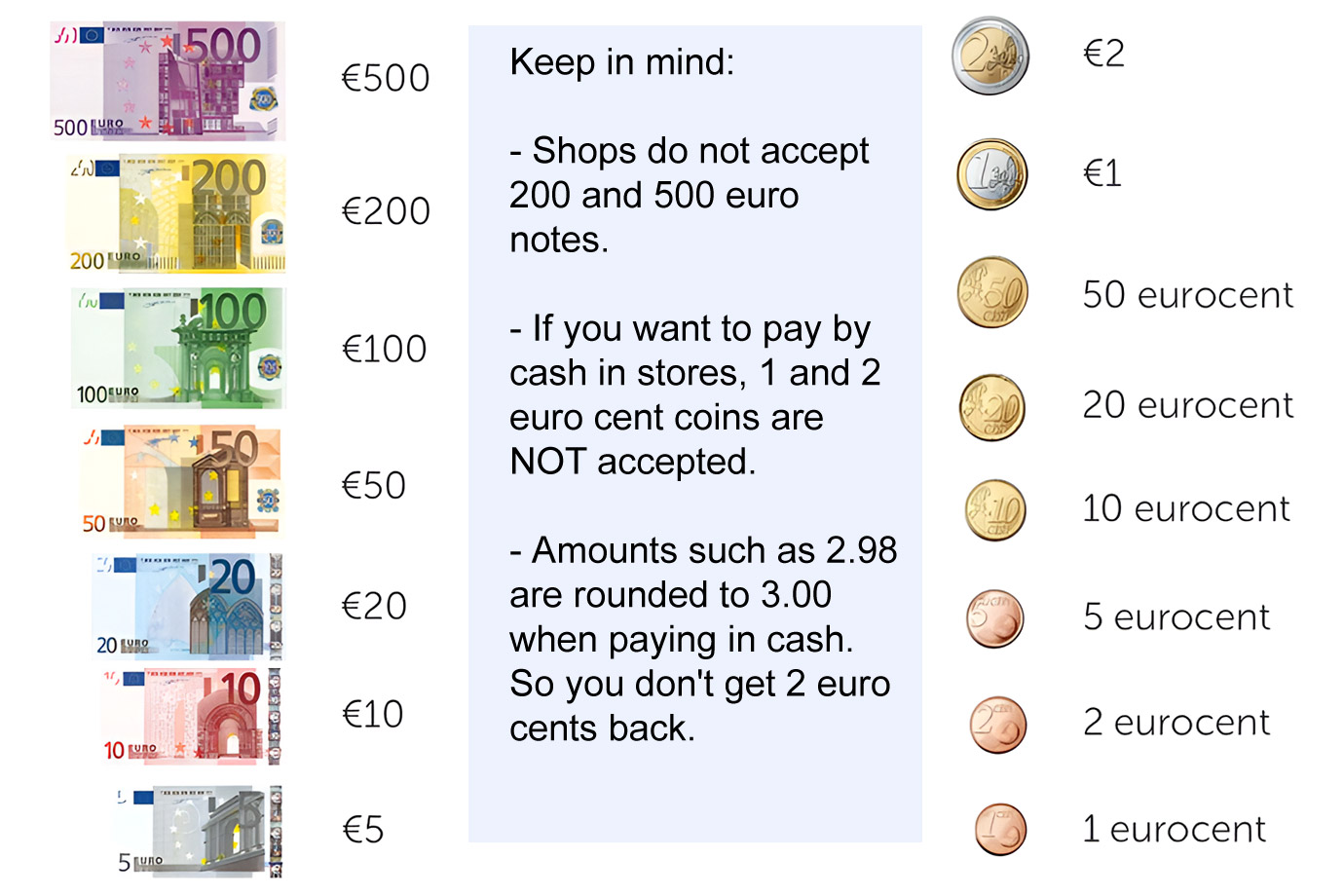
In the Netherlands our means of payment is the euro. There are 8 different euro coins: €1, €2, €0.50, €0.20, €0.10, €0.05, €0.02 and €0.01.
There are 7 different euro banknotes: €5, €10, €20, €50, €100, €200 and €500.
How to pronounce?
We generally call coins in our pocket KLEINGELD. The official word (what a bank or store uses) is MUNTGELD. The literal translation for coin is “MUNT”. Dutch people often only use the word MUNT(EN) when they talk about someone who collects old coins or when they talk about gold coins, a treasure: GOUDEN MUNTEN.
| Kleingeld | (small) change | |
| Muntgeld | coins | |
| Munt | coin | |
| Munten | coins | |
| Gouden munten | gold coins |
If you have to mention an amount in euros, it works as follows:
If the amount consists only of cents, you say the number (amount) and add cents or cents.
Example: Something costs € 0.50. Then you say: Het kost vijftig cent. (It costs fifty cents).
If the amount consists only of rounded/ whole numbers (no cents), you say the number (amount) and add euro.
Please note: Dutch people always pronounce whole euro amounts in the singular. So when we talk about 10 euros, we say 10 euro and not 10 euroS (plural). Some will use the plural + diminutive when they talk about euro’s. Like: Ik kreeg 100 eurootjes. (i get 100 euro’s)
Example: Something costs € 8,00. Then you say: Het kost acht euro. (It costs eight euro).
If the amount consists only of rounded/ whole numbers and cents, you say the number (amount) before the comma and you add “euro” and then you ONLY say the amount of cents. So you don’t have to say “cent”.
Example: Something costs € 8,50. Then you say: Het kost acht euro vijftig. (It costs eight euro and 50 cents).
Tijd/ Time
You can drag the large and small hands of the clock. The time appears below the clock. You can select this time (only Chrome browser or mobile) to listen to how you pronounce the time.
rev. 170624